IBBC at the Labour Conference

It could be argued that one of the more successful areas of Labour government has been its foreign policy- keeping USA on side, ensuring the UK has lower trade tariffs than most countries and facilitating $150bn Inward tech investment, enabling a $12bn trade deal with Iraq, recognising Palestine and getting closer reset with the EU.
Which is surprising that the conference was very focused on whether Mr Starmer would survive a leadership challenge, The Climate crisis, many local national issues, and foreign policy discussions that centred almost entirely on Gaza and getting close to the EU. In short, any strategic insights into wider foreign policy, even relationships with USA, the Gulf or Iraq, were almost completely overlooked.
However, glimpses of MEA recognition did occur during the Labour Middle East council’s breakfast briefing, where Hamish Falconer MP and the Middle East minister hosted several Ambassadors, including the Kurdish consulate representative to UK, Jordanian and Turkish Ambassadors. MR Falconer briefly referenced the trade deal with Iraq, but largely focused on Palestine and Gaza and Tan Dhesi MP , head of the select committee on defence spoke about the importance of security to the Gulf states, and how defence discussions lead to friendships and collaboration with the UK. IBBC also shook hands with the new Foreign Secretary, Yvette Cooper and spoke with her new PPS Katherine Atkinson.
Wider areas of interest included a strong Tech profile through the Startup Coalition, where very high-profile UK tech actors discussed AI and how Uk can become an AI superpower, drive growth, modernise the state and all ministries like the NHS- including discussion from the impressive AI minister Kanishka Narayan MP: Nvidia and Encel. IBBC’s tech forum in Basrah will be following up with contacts made.
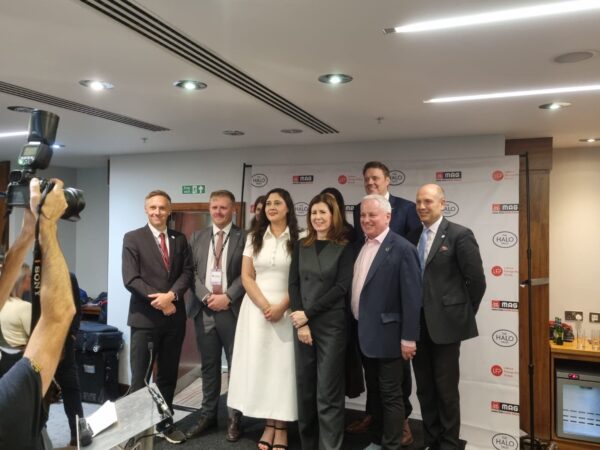
The challenge to Kier Starmer from Andy Burnham did not materialise and can be seen as positioning from Mr Burnham for the future, lest Starmer falters. We attended an intelligent trade panel with discussions from International Chambers of Commerce (with whom we will be following up ) CITP (centre for inclusive trade policy ) at Sussex University, where it’s clear there needs to be a more strategic approach to trade and where the UK should focus its DBT and Foreign policy efforts. The Halo trust (mine advisory) event attracted Baroness Chapman, the development minister, who suggested the development budget would be cut but try to retain focus on Women and children.