IBBC at the Labour Conference
The Labour Conference began in a much happier mood than in previous years, buoyed by Andy Burnham as the new Prime Minister. He did not disappoint them. With a clear and positive speech on the aims of his government, he then, optimistically, set out Labour’s priorities for the next 10 years: council house building, a National Care Agency, a National Energy Grid and agency, state control of water, significant devolution of powers to local mayors, a reset with the EU (including rejoining options!), and a proportional representation electoral pivot.
What was missing was discussion of how these ambitions will be paid for, with only small references to business, other than nods to AI and innovation, and very little on foreign policy except Gaza, the Gulf crisis insofar as it affects inflation here, and a small “continue to support Ukraine” reference. Labour is largely focused on the domestic agenda and extended state control over key utility areas, and the speech was very heavy on emotion and rhetoric.
Burnham’s agenda pretty much followed the conference themes, with an overwhelming focus on domestic and social issues, very little on business or details on how to generate growth, and very little on foreign policy, except sanctions on Israel and the importance of Labour values and international law.
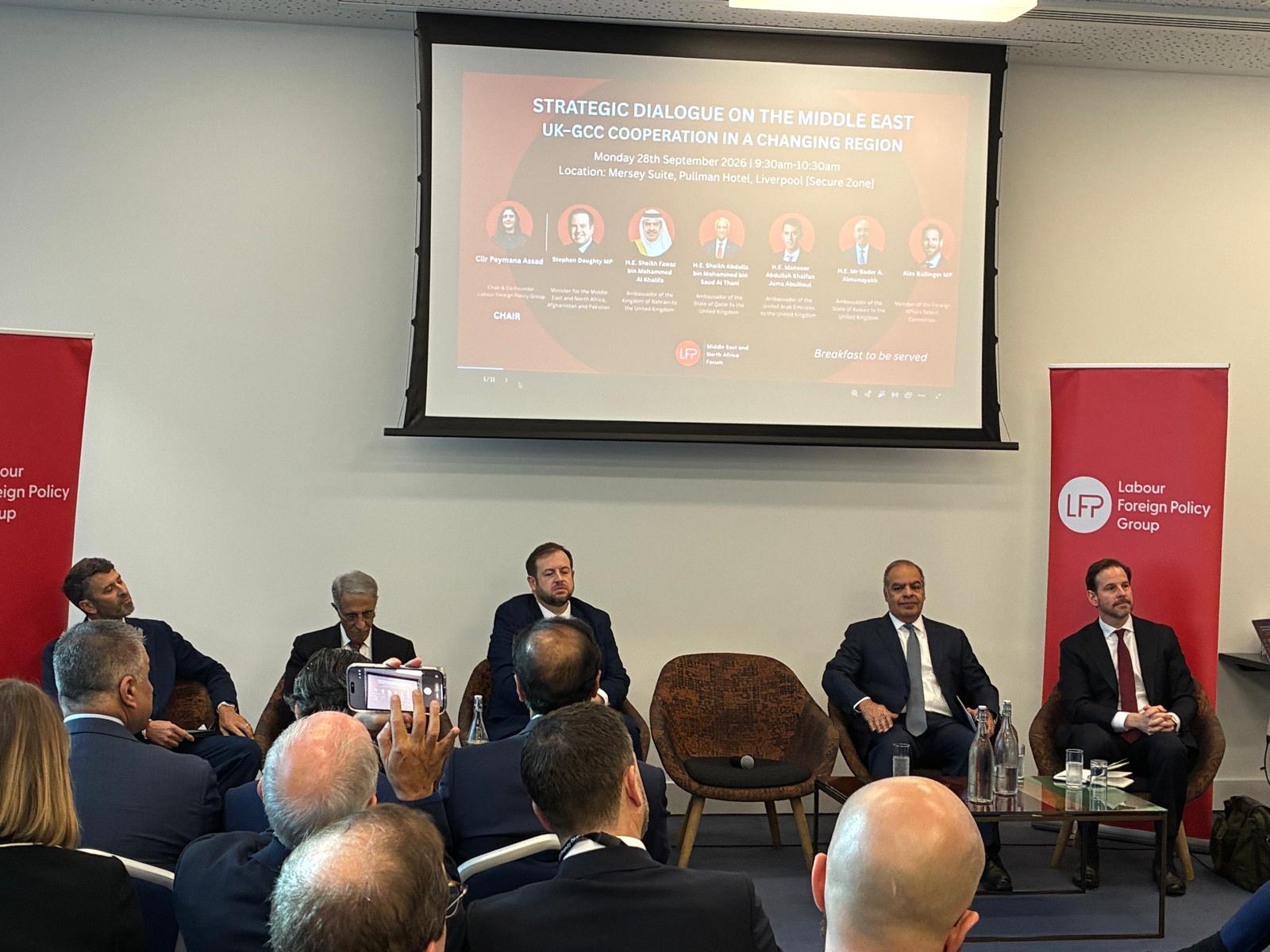
IBBC attended the few fringe events addressing the Middle East or trade, which included the Arab Ambassadors’ reception, with Stephen Doughty, the Middle East Minister; Lord Anas Sawar, the Trade Minister, who talked almost exclusively about social justice in the Middle East; and the Bahraini Ambassador, who heads up the Arab Ambassadors Council. The Iraqi Ambassador and KRG representatives were on good form, and we also met the Omani Deputy Ambassador and Turkish Ambassador.
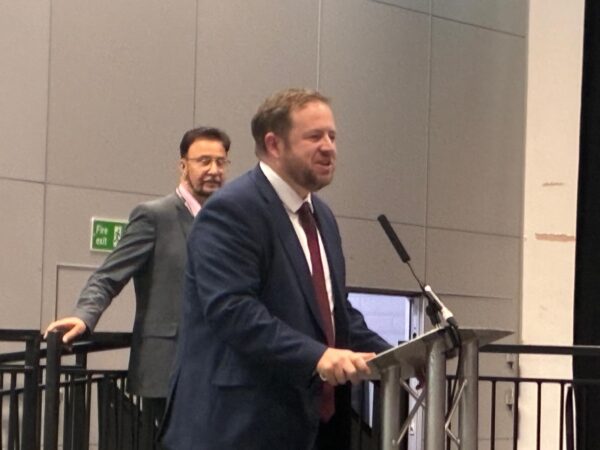
Stephen Doughty spoke at a Caabu event and said the UK will stand behind our partners in the Gulf. He outlined the government’s approach to foreign relations: support international law, act on Labour values (i.e. what they believe to be right or wrong and do the right thing morally), and work with partners such as the EU in tandem to effect change. The effects of this policy can be seen in their sanctioning of Israeli settlements and support for a Palestinian state, which was widely praised by the Bahraini Ambassador and the audience.
Emily Thornberry, head of the Foreign Affairs Select Committee, spoke along similar lines at the Caabu event, where they discussed the crisis in the Gulf and among international institutions. Labour will support the strengthening of, for example, the UN and international legal and regulatory powers, and stand with our partners bilaterally to uphold their values and international law.
Stephen Doughty was accessible and spoke at the Labour foreign policy group along similar lines, and Ashley had a conversation with him, inviting him to IBBC’s Baghdad Conference and the Mansion House event, which he is attending.
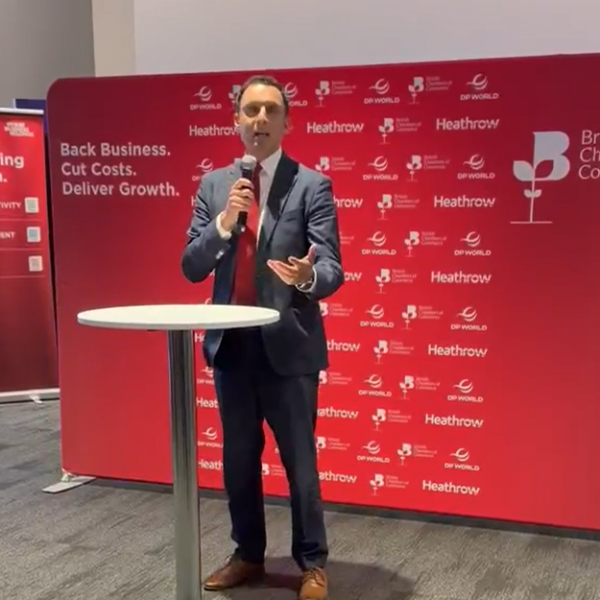
Anas Sawar, the Trade Minister, also attended the British Chambers of Commerce event, where he gave a positive speech on finding win-win situations for trade with other countries and the importance of exports to the UK economy — i.e. a 2% increase in exports leads to a 0.6% increase in GDP. He was open and welcoming to IBBC, so we have an opportunity to meet him when the time is right, define the opportunity for more trade, and pitch it.
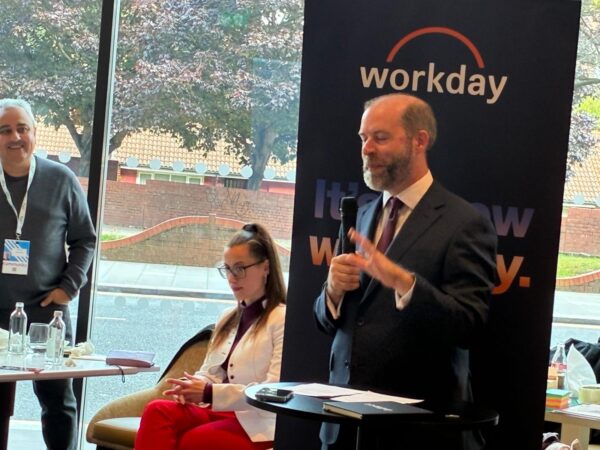
Jonathan Reynolds, the Business, Science and Trade Secretary, spoke at the Labour business event and at a wider arena event with the British Chambers of Commerce. He explained the wider remit of his department, which also includes AI and science, areas that he hopes to integrate more closely. There are two business members in the Cabinet, so he hopes to raise the business voice more strongly and to coordinate more closely with other departments, such as Transport and Defra, to drive a more joined-up approach to ease of doing business.
Finally, the devolution agenda will give mayors more control over business development and focus in their areas. As with many of the speeches, the discussions were strong on rhetoric and intent, but thin on real content or implementation.
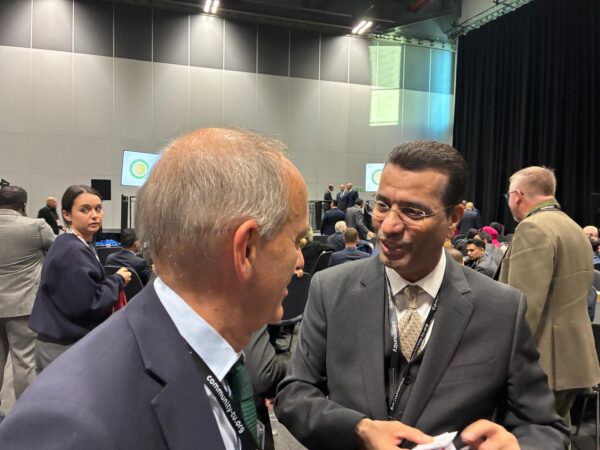
IBBC also attended the EU Commissioners’ and Ambassadors’ reception, where former Middle East Minister Hamish Falconer spoke about resetting and renegotiating with the EU and a summit planned for December. We also met the Mongolian Ambassador, among others.
To summarise, the conference was strong on “good vibes” and positive rhetoric, very domestic in focus, with little foreign policy beyond generalised support for international law, working with partners, and the situation in the Gulf. However, it was short on how to achieve these ambitions, with very little mention of what will encourage growth or recognition of the needs of business.